A blocked drain isn't just an inconvenience. It's often a sign that something's wrong further down the pipe, and clearing the blockage without finding out why it happened means you'll be back here in three months with the same problem.
At Drainsco, we clear blocked drains, sinks and toilets across Sutton Coldfield and the surrounding areas, but we don't stop at shifting the obstruction. We find the cause. If there's a collapsed section, a root ingress, a build-up of grease hardened onto the pipe wall, or a misaligned joint that's been catching debris for years, you'll know about it before we leave.
No call-out fee. Uniformed, DBS-checked engineers. The price is agreed on the phone before we lift a single cover.
What's Actually Causing the Blockage
Most people assume a blocked drain is caused by whatever went down it last. Sometimes that's true. More often, there's an underlying condition in the pipe that's been collecting material over time until the flow finally stopped.
Common causes we find in properties across B72 to B76:
- Fat and grease deposits, especially in kitchen drains, that have cooled and hardened into a solid layer inside the pipe
- Root ingress from trees and shrubs, which is particularly common in the older estates and tree-lined roads across Four Oaks, Streetly and Little Aston
- Collapsed or cracked sections, often in clay pipes laid fifty or sixty years ago, where the pipe has shifted enough to hold water and debris
- Misaligned joints where sections have moved apart slightly, creating a ledge that catches wipes, scale and silt
- Foreign objects flushed down toilets, a common culprit in family homes across Walmley, Boldmere and New Oscott
- Scale and silt build-up in older cast-iron waste pipes that haven't been descaled in years
Once we know the cause, you can make a proper decision about whether a one-off clearance is the right fix or whether something more permanent is needed.
Internal Blockages: Sinks, Baths and Toilets
Internal blockages tend to show themselves in a few ways. A sink that drains slowly before stopping completely. A toilet that fills to the rim when flushed and sits there. A bath that backs up while you're in it. Occasionally, a smell that gets worse when you run water.
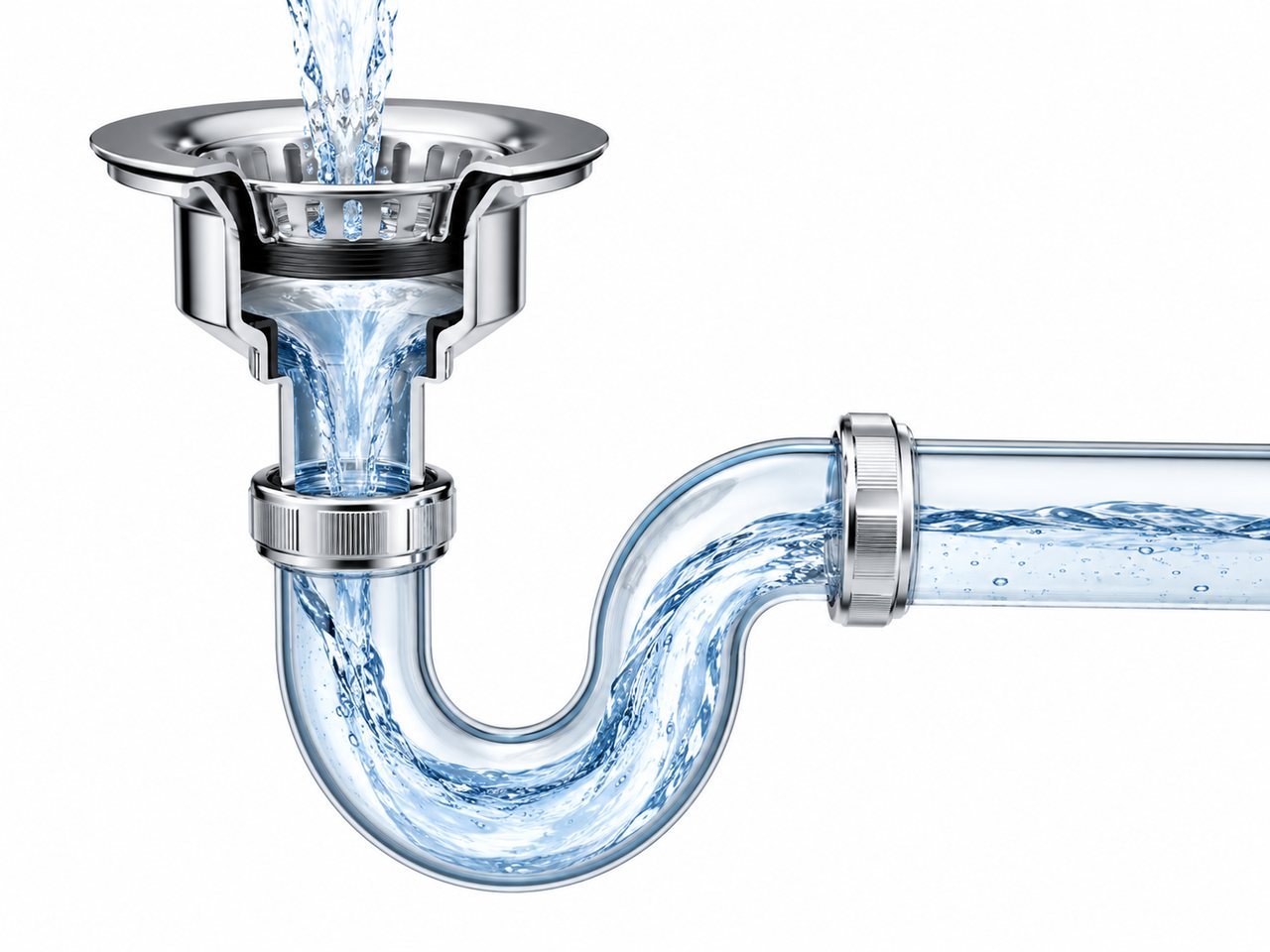
For sinks and baths, the blockage is usually in the trap or the short waste run before it joins the main stack. It can be cleared quickly, often in under an hour. Toilets are slightly different. A toilet that won't drain at all usually means a blockage at or just beyond the pan, but if two or more fixtures are slow or backing up at the same time, the blockage is likely in the shared drain or the main sewer connection underground.
That distinction matters. Clearing the toilet when the real problem is in the external drain just moves the blockage temporarily.
External Blockages: Drains, Gullies and Manholes
External blockages are usually in the underground drainage run between your property and the sewer connection, or in a gully or manhole that's become silted up. They tend to announce themselves through pooling water on the drive, a manhole that's filling up and not clearing, or that unmistakeable smell of sewage near the back of the house.
High-pressure water jetting, carried out to Water Jetting Association standards, is the most effective way to clear most external blockages. It cuts through grease, breaks up compacted silt and flushes root matter out of the pipe. Where jetting alone isn't enough, or where we suspect a structural problem in the drain, we'll run a CCTV survey to get a clear picture of what's happening.
| Situation | What we do | Next step if needed |
|---|---|---|
| Single blocked sink or bath | Rod or clear the trap and waste run | Check the stack if other fixtures are slow |
| Blocked toilet, other fixtures fine | Clear at the pan or short drain run | Camera check if it blocks again quickly |
| Multiple fixtures slow or backing up | Locate the blockage in the shared drain | Jet the line, survey if cause is unclear |
| External drain or manhole blocked | High-pressure jetting | CCTV survey if structural issue suspected |
| Gully blocked, water pooling on surface | Gully clearance and flush | Check connection to main drain |
Repairs and relining, where needed, carry a 20-year guarantee.
Where We See It Most Often
Blocked drains are a fact of life across all of Sutton Coldfield, but certain areas throw up particular patterns. The older Victorian and Edwardian terraces in Maney, Tudor Hill and Wylde Green tend to have clay drainage laid over a century ago. That pipework moves, cracks and attracts root ingress. Estates built in the 1960s and 70s, including parts of Falcon Lodge, Reddicap Heath and New Oscott, often have drainage that's never been surveyed and is running on borrowed time.
Out towards Mere Green, Whitehouse Common and Four Oaks, large gardens and mature trees mean root cutting is a regular job. Properties in Minworth, Water Orton and Curdworth often sit on older combined sewers that carry both surface water and foul water together, which creates its own complications when things go wrong.
Wherever you are in postcodes B72 to B76, and across the surrounding villages of Little Aston, Shenstone, Wishaw and Aldridge, we'll get to you.
When to Call Rather Than Wait
Some blockages are urgent. Others are slower to develop but still need attention before they become urgent.
Call us straight away if:
- Sewage is backing up into the property or overflowing outside
- You've lost the use of your only toilet
- Multiple drains have stopped working at the same time
- You can smell sewage inside the house
Don't leave it and hope it clears if a drain has been running slowly for weeks, a manhole keeps filling after heavy rain, or a sink has blocked twice in the past few months. Slow blockages are usually telling you something about the condition of the pipe.
Our engineers are on call 24 hours a day, seven days a week, across B72 to B76. The job is priced individually, agreed before any work starts, with no call-out fee. Call 0121 816 1830 and we'll talk through what you're seeing.